

Thatcher Broke Britain
A history of Britain from 1979 to 1982
What a horrible place Britain was in the early 80s.
I’m reading Dominic Sandbrook’s Who Dares Wins. This is one of five books that tell the history of Britain from the fifties up to the eighties. Most of the book is about the politics of the era, with Mrs Thatcher as the star of the show.
Actually… star of the show? Make that the villain of the piece.
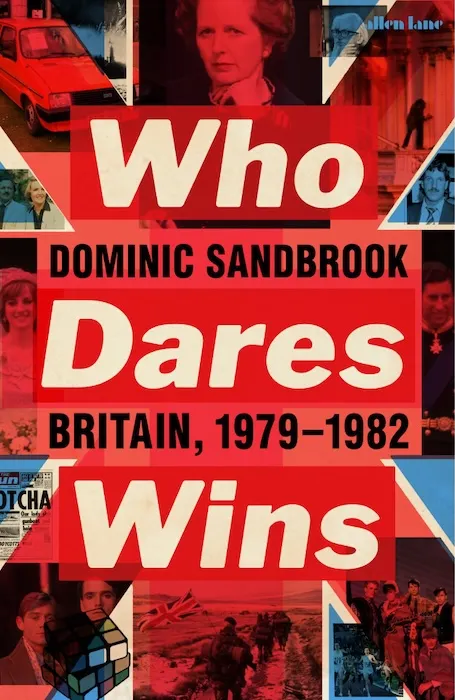
I was a teenager during this period, and I remember it as a period of adventure and good times, but Sandbrook reminded me that there was plenty of other stuff going on that wasn’t so jolly.
It covers probably the single most controversial period in my lifetime: the first Thatcher administration, which still evokes extremely strong feelings today. Many of the events it covers – the advent of the first woman Prime Minister, the catastrophic recession of the early 1980s, the inner-city riots of 1981, the civil war inside the Labour Party, the New Romantics, the Northern Irish hunger strikes and of course the Falklands War – could easily take up hundreds of pages. And the cast of characters – everybody from Margaret Thatcher, Tony Benn and Ken Livingstone to Ian Botham, Simon Le Bon and Clive Sinclair – is almost Dickensian in its lurid variety.
— Dominic Sandbrook
Britain was already experiencing disaster before Mrs Thatcher came along. Unemployment was at scary levels, and industrial action brought strikes just about every week: miners’ strikes, dockers’ strikes, car manufacturers, truck drivers, gravediggers. The list goes on. The military was called in to cover the most critical strikes, and some friends of mine drove fire trucks when the firefighters stopped fighting fires. Unions were demanding 40% pay rises, inflation peaked at 26.9%, and unemployment reached 5.5%. There were riots.
This period is remembered as the Winter of Discontent.
Britain was already experiencing disaster before Mrs Thatcher came along. Unemployment was at scary levels, and industrial action brought strikes just about every week: miners’ strikes, dockers’ strikes, car manufacturers, truck drivers, gravediggers. The list goes on. The military was called in to cover the most critical strikes, and some friends of mine drove fire trucks when the firefighters stopped fighting fires. Unions were demanding 40% pay rises, inflation peaked at 26.9%, and unemployment reached 5.5%. There were riots. This period is remembered as the Winter of Discontent.
Mrs Thatcher moved into 10 Downing Street with the intention of leading a revolution to cure Britain’s woes. Thatcher wanted to replace Britain’s postwar economy, based on welfare and workers’ rights, with policies centred on deregulation, tax reform and privatisation. Milton Friedman was her hero.
But Thatcher led Britain further down the economic drain. Industry collapsed. Unemployment doubled to 12%. Interest rates reached 17%. I remember watching the BBC News as a teenager, seeing yet another industry closing for good every evening. All the car companies, the factories that made ships, the mines, heavy industry and the makers of textiles. All gone.
Thatcher broke Britain.
It wasn’t all bad, though. When I was 14, everyone I knew lived in a council house. We were a family of six living in a 900 sq ft (83m²) maisonette on a housing estate. The rent was £24 per month, and I loved it. Loads of friends. Loads of adventure.

Back then, nearly half the population lived in council houses owned by the government, but one of Thatcher’s defining policies was to sell off the council houses to the people who lived in them. It was a good policy, and it gave the poorer classes something to aspire to. Two million council houses were sold. Both my mother and my father (divorced by now) bought their council houses, and we transitioned from working-class to middle-class along with the rest of Thatcher’s society.
Spreading the ownership of property more widely is central to this Government’s philosophy.
— Mrs Thatcher
It is central because where property is widely owned, freedom flourishes.
Aside from a handful of popular policies like Right to Buy, Mrs Thatcher, in 1980, was the least popular prime minister ever. Probably, the only thing that saved her was that the Labour Party were hated even more.
The chapters about the Labour leadership are astounding. Practically all the sensible leaders had been driven out of the Labour Party. By 1980, socialist Michael Foot was the only one left who wasn’t a communist revolutionary. Tony Benn wanted to nationalise all the key industries and have them run by workers’ collectives. He also wanted to abolish the monarchy and Britain’s nuclear deterrent.
Mrs Thatcher’s attitude to the Irish Republican Army (IRA) earned her popularity too. Northern Ireland’s “troubles” had started in the early seventies, but the IRA’s terrorist attacks on the British mainland reached a peak after Thatcher came to power. They were appalling.
The IRA killed 50 people in London with bombs and injured 800 more. Nail bombs were especially evil when the curved nails stuck in civilians’ faces and bodies.
Several IRA prisoners in Northern Ireland went on hunger strike during this period because they wanted to be treated as political prisoners rather than criminals. Their leader, Bobby Sands, was elected to parliament during his hunger strike, but died, along with nine fellow prisoners, but Mrs Thatcher showed no mercy.
There is no such thing as political murder, political bombing or political violence.
— Mrs Thatcher
Besides politics, the book covers plenty of sports and culture — but there was plenty of violence in here, too. Football hooliganism had been a growing problem throughout the 70s, but it got worse in the 80s, and English fans took it to Europe.
The fighting at home was bad enough, but it was worse in Europe. Gangs of English thugs would smash foreign cities before every game, and attack people in the street, football fans or not. The violence peaked at Heysel Stadium in Belgium when Liverpool fans breached a fence to attack Juventus fans. 39 people died, and 600 were injured. Fourteen Liverpool fans were sent to prison, and English clubs were banned from Europe for five years.
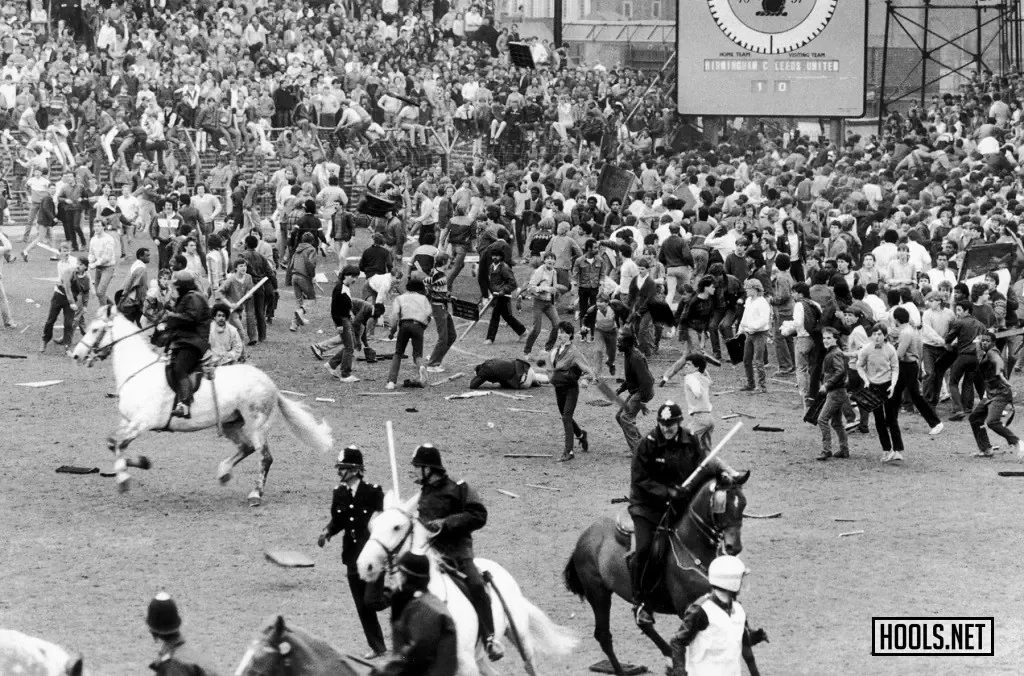
There were plenty of race riots back home, too.
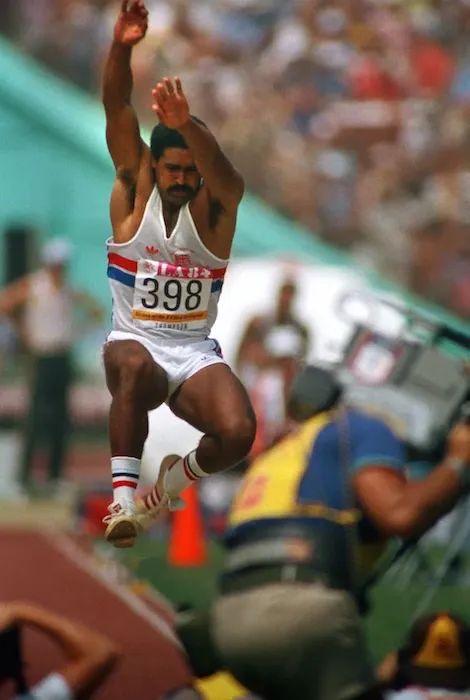
Apart from the riots, there’s a lot more on sports, but it’s mostly good news this time. Sebastian Coe and Steve Ovett broke world record after world record in the 800m and 1500m. Daley Thompson became an English hero in the decathlon, and Ian Botham was a legend.
The music chapters were good, too. Spandau Ballet and Duran Duran are obvious stars of the time, but there are also bits about smaller musicians like The Specials and Gary Numan (who married my next-door neighbour). That period of music was probably the most political before or since, and Sandbrook uses their stories to make wider points about society.
I am the one in ten, a number on a list.
— UB40
I am the one in ten, even though I don’t exist.
The next chapter is about the Falklands War, but I have said enough about my own trip there already. The Argentinians surrendered.
I love Who Dares Wins, but Dominic Sandbrook does go on a bit. Forty pages on Steve Davis winning the World Snooker Championship was maybe a bit too much, and I know a lot more about Tony Benn now than I needed to know. But, still. I recommend it heartily. I still have the other four books waiting to be read, but I might take a break before I dive into those.
In addition to being a great writer, Dominic Sandbrook has a podcast — The Rest is History — that he shares with Tom Holland. According to Spotify and Apple, The Rest is History is the most popular podcast in the world.
They do an hour-long podcast every week with snippets of history ranging from the Peloponnesian War to the Titanic, with episodes on Nazis, slavery, and Marie Antoinette in between. You’ll be surprised at how often they make you laugh and cry (especially during the Battle of the Somme or the Holocaust).
There are 800 episodes, but you will probably only enjoy 700 of them. Give them a try!
Great to see you publishing again, I have missed your writings. I hope you are well. I am actually planning to visit my old homes in Sidcup next year at the same time as the Chis and Sid Open Day. Thanks again; stay safe.
Thank you! I’ve been busy with my degree, but that’s all done now.
I have got about 8 posts on the go at the moment so there should be more coming soon.
Smashing, I am looking forward to the 1982 chapter. Your perspective will be most interesting.
I have some more posts coming to my “memoir” series. I have some Navy posts on the way, then I’ll go back to do a bit of Sidcup.
This brings back memories of the ’70s, when I had a bicycle shop in the US. By that time, the proud Raleigh brand had become a joke, with absolutely poor quality. A former US Olympic cyclist visited my shop, representing Raleigh. After he gave me his pitch, I told him what I thought about their quality and reliability. He took a deep breath and said, “Dave, Raleigh has to deal with five different unions inside their factory, they go out on strike all the time, huge labor turnover, etc.” I said, ” And why should I want such a problem.” I guess the problem was a little bigger than Raleigh. Good article, as always.
My first bike was a Raleigh. It’s a shame how many great brands died out in that period.
So good to hear from you Kevin. I do enjoy your writing on history. It seems Britain and the US share very similar stories. I will check out the podcast you recommended. Have you listened to Heather Cox Richardson? She is a professor of history at Boston College. She uses fact and history to put the current news in context. I find her so interesting and calming in the chaotic world we find ourselves. Look forward to more of your insights.
You are very kind, Rosemary. I have some posts on my time in the Navy coming up next.
I haven’t heard Heather Cox Richardson‘s podcast, but I do read her articles on Substack occasionally. She has an interesting point of view.
Off the subject…Dylan will play in Austin, TX on Monday and Tuesday. The newspaper says he rarely plays the guitar in concert. He will probably stand at the piano in a hoodie. He holds the harmonica in his hands now. His voice is gravelly. But the paper did not disparage his recent work. Carolyn Hester lives in Austin. She introduced John Hammond to Dylan. She has an incredible history in music.
That sounds cool. What is he? Eighty-something years old?
Are you gonna go see him, Claire 😊