

Which religion should you choose?
The religion vs atheism argument popped up again. I’ve joined the argument many times before, but I’m not even interested now. I am still an atheist, but I also read literature and listen to folk music, and I don’t need those on my T-shirt, either. If you are religious, I’d love to learn about your religion, but I have no interest in arguing or changing your mind.
Arguments about religion address two different flavours of God:
- The God from scripture shares love and turns water into wine.
- The philosophers’ God creates puzzles that test our reasoning.
The arguments over the philosopher’s God have popped up on the internet again, and they mean even less to me this time around.
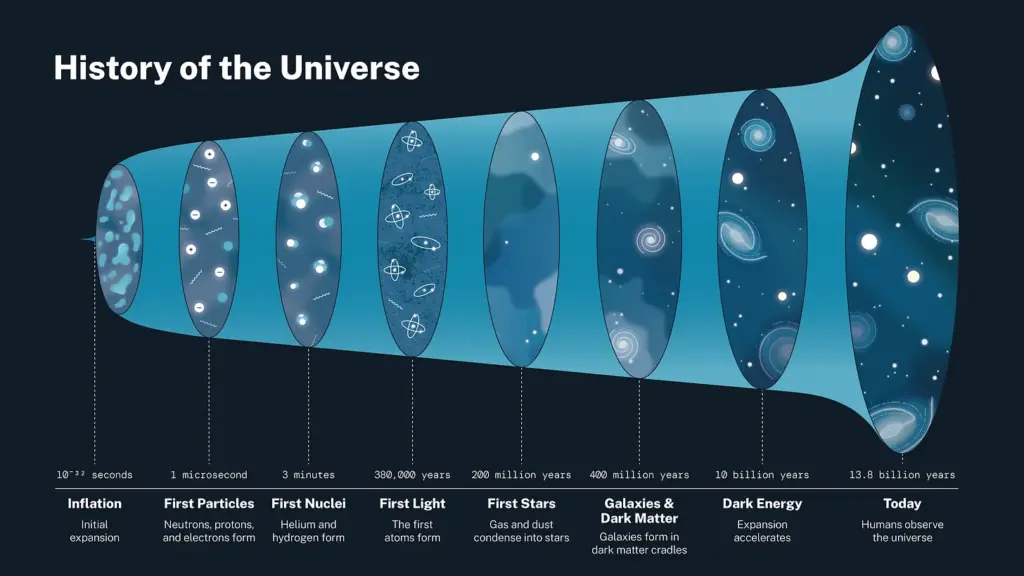
One philosophical argument is the fine-tuning argument, which claims that the composition of the universe is fine-tuned to make life possible. If a small number of constants such as the strength of gravity or the charge of an electron were just a little different, life could not exist.
According to many philosophers, it’s unlikely the constants could have been arrived at randomly, so God must have chosen them.
There are several arguments against this.
The multiverse hypothesis says there are many different versions of the universe, and each one has a different set of values for the constants. We just happen to live in the one that has the constants we need. We just got lucky.
Another argument says there is no reason to suspect the constants could have different values at all. We just call them constants. Perhaps they really are constants. Perhaps they “just are”, and there’s no reason to think they could be anything else.
Richard Dawkins says that even if we know those constants come from God, it still leaves us wondering where God comes from. If the universe can’t come from nowhere, then neither can God.
There are several such philosophical arguments. The cosmological argument, for example, says every event must have a cause. An infinite chain of causes is impossible, so there must be a first cause. That first cause is God. But as with the fine-tuning argument, we are still left asking who caused God.
For many of these philosophical arguments, you are more likely to find them persuasive if you already believe in God. If you don’t believe in God, these arguments won’t convince you.
I don’t find these arguments persuasive, but that’s OK. I don’t feel any need to accept the fine-tuning argument or to reject it, and I’ll just wait until we have evidence either way. Until then… whatever. They don’t affect my everyday life, and I don’t need to agree or disagree. Just let me know when you find some proper evidence.
Arguments for the Christian God are more interesting.
I’m still not persuaded they are true, but they make for a good story. I enjoy stories from the Bible — just as I enjoy The Iliad or The Lord of the Rings. I read them often. I am reading The Gospel According to St. John at the moment. Cool stuff.
Are the stories from the Bible (or the Ramayana or the Koran) true? I doubt it, but that’s OK. They are good stories, and I enjoy reading them.
Growing up in England in the 1970s, hardly any of my friends believed in God, but school and society told bible stories every day. We went to church for births, deaths and marriages; we said the Lord’s Prayer every morning and sang Carols at Christmas.
In those times, we checked the religion box on every official form. Need a new passport? Church of England. Need to refill your prescription? Church of England. The government back then needed your religion like they need your ethnicity and gender identity today.
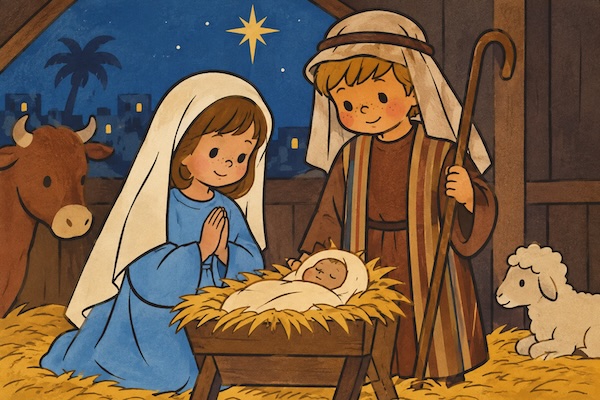
California was very different. If you were Christian, your kids went to church. If you weren’t Christian, your kids missed out on the centrepiece of Western Civilisation. My kids never sang The Lord’s My Shepherd or dressed as Mary and Joseph in a stable for the Christmas play.
Religion in England in the 1970s was a part of life, but no one required you to believe anything. It was different in America.
You either got faith or you got unbelief and there ain’t no neutral ground.
— Bob Dylan
Coming home to England after 25 years in California, religious society is more like America’s. The law still requires schools to echo Christian tradition and hold daily prayer, but barely any do. Most people get married in a registry office, and it’s cheaper to get cremated.
There are too many people from other religions now and too many who don’t care. I think that’s a shame.
You may be interested in the new book: Spinoza: Atheist. You are interested philosophy and religion and, evidently, much more into it than I am. I’m a quarter through it, with all its nitty gritty philosophical arguments not only about the possible existence of god, but of the exact nature of a divine being during the 17th century in Europe.
I’m finding it tedious and asked myself just this morning if I care enough about history to keep reading. But, I think, Kevin would just “eat it up.” Well, I may slough on for a bit…
Thanks, Red.
I haven’t read any Spinoza yet, but everything I’ve read about him says that he is not easy to read!
Maybe I’ll leave him a bit longer…