

Where did the rules against slavery come from?
Did we invent our moral values? Or were they there all along?
I just finished my philosophy degree and decided all philosophy is nonsense… but just when I thought I was out, moral philosophy dragged me back in.
I heard some people arguing over moral realism and subjectivism…
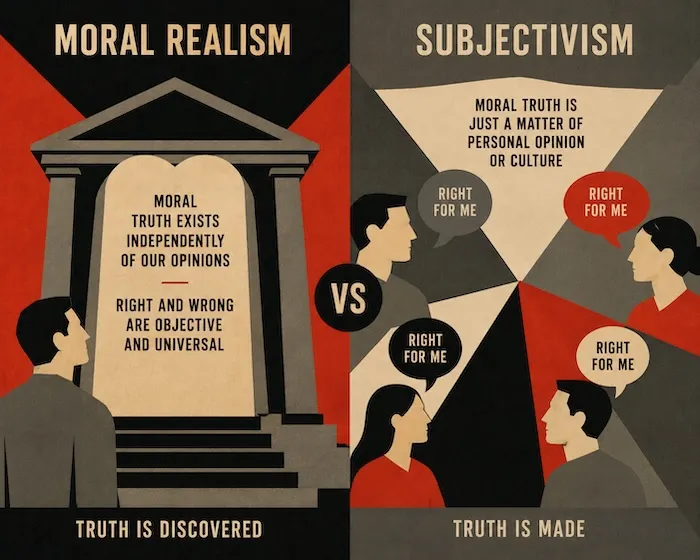
Moral realism says moral truths are discovered through human reason, rather than invented by society (SEP). For most moral realists, Good comes from God. Others say that morals just exist in the world the way arithmetic exists in the world (SEP). We didn’t invent the rules. They were here all along.
Moral relativism (SEP) says morals are true within a social group, but they change as the culture changes; Subjectivism (SEP) takes this further and says morality depends on your personal opinion: there are no absolute rules of right and wrong. You might prefer that people don’t kill each other, but others might have a different point of view.
There is nothing either good or bad, but thinking makes it so.
— Hamlet, William Shakespeare.
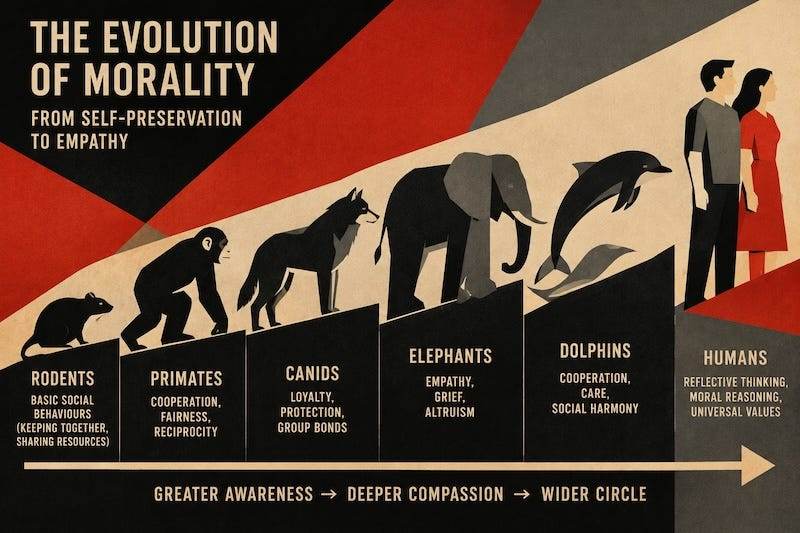
I think evolution has something to say about morality.
Some moral values exist in all cultures, but they evolved as we evolved. For example, kin selection gives humans a responsibility to care for our children (SEP). These are not rules we made up for ourselves, and they did not come from God. They did not exist until evolution decided what was best for us(wiki).
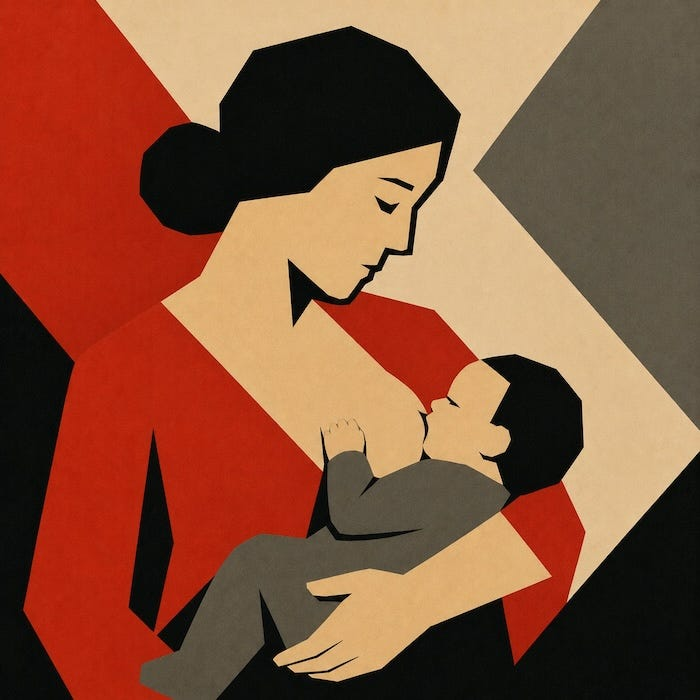
And it’s not just humans who follow kin selection rules.
Orangutans care for baby orangutans, and worker bees care for baby bees (Penn State). Other animals don’t care for their young at all — some fish just lay their eggs and swim away — but like us, they are doing what evolution decided was best for them (SEP).
The basic idea behind kin selection is simple. Imagine a gene that encourages an animal to share its food with its family. Everyone in a family will likely have that gene, and if one member is hungry, others will share, and all are more likely to survive because sharing their food improves their evolutionary fitness. Animals without the gene behave selfishly, and their young are less likely to have food. They go hungry and are less likely to survive. Kin selection favours families that share.
Kin selection was developed into a formal theory by William Hamilton. Hamilton showed that kin selection is worthwhile if the benefits exceed the cost.
Altruistic behavior is worthwhile when the relatedness (r) multiplied by the benefit (B) is greater than the cost (C), expressed as rB > C
Hamilton’s Rule
Donors and recipients are more likely to share genes if they are closely related (SEP), and sharing goods with family members makes the altruism gene more likely to survive.
Richard Dawkins takes this gene-centric idea further in The Selfish Gene. While moral realism says moral truths exist independently of history, these truths can be explained as survival strategies given to us by natural selection.
Reciprocal altruism is a similar rule and involves doing a favour knowing the favour will be returned, but it does not depend on family relationships the way that kin altruism does (Trivers). For example, a vampire bat will care for another bat’s baby while she goes off to suck someone’s blood, and the grateful mother will return the favour next time around (SEP). There is little benefit to sharing with non-altruists, so non-altruists are less likely to survive, and the animals in the next generation are more likely to be altruists.
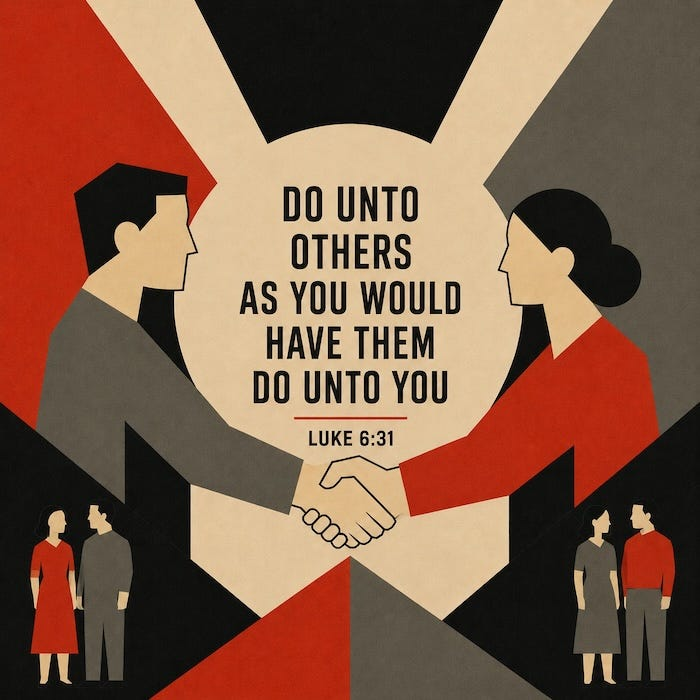
Altruism is not restricted to one-on-one kindness; some animals will risk their lives to save others. Vervet monkeys alert their fellow monkeys to predators, and they have even developed different calls for different kinds of predators. Vervets can tell leopards from snakes and eagles, and their calls tell other monkeys whether to run up the tree or down it. This variety of altruism doesn’t even require shared genes to be profitable; the benefits of saving a fellow monkey justify the risk of being attacked (SEP).
We might say that altruism as a moral principle has been around since before humans came along, but nonetheless, it hasn’t always been there. It evolved over time.
In addition to the morals that evolution has given us, we humans have figured out some rules for ourselves, though moral realists tell us they are objectively true, and religious believers say they came from God.
For example, the Book of Exodus has rules against stealing, murder and coveting thy neighbour’s ass. Most civilisations have these rules, though, even if they have had no contact with God. If we are to say they came from God, we have to explain where other godless societies found them.
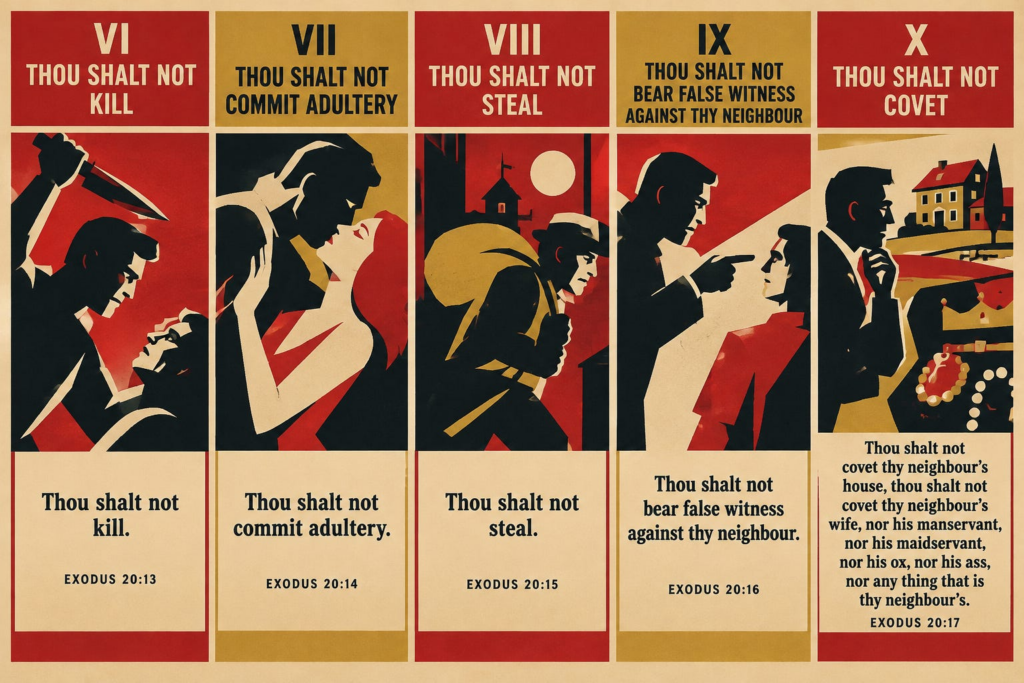
Religions say God gave us these rules long before they were written down in the Bible, but moral realists would say we have always had them. Derek Parfit argued that moral truths are objectively true, independently of any human desires (SEP). When we say it is wrong to torture children, it’s just wrong, regardless of what we think. Similarly, we don’t have to argue why the area of a circle is πr2; it just is, and morals aren’t something we came up with; they just are.
Like Derek Parfit, Peter Singer came to believe that moral truths are self-evident and need no explanation (YouTube). Parfit and Singer claim that when we make moral assertions, we are reporting facts about the world, while subjectivists say morals aren’t even facts; they are just ways of expressing our preferences. Morals are neither true nor false any more than it’s true or false that chocolate ice cream is nicer than strawberry ice cream; we just choose the one we like best.
Taking this even further, emotivist A.J. Ayer would say that when we say something is immoral, we aren’t even sharing a preference; we are just sharing an emotional reaction. A subjectivist might say, “I believe that stealing is wrong”; but an emotivist would say this is nothing more than saying “Boo to stealing!” [SEP]. When people disagree over a moral decision, they are not contrasting opposing opinions; they are simply expressing their emotions.
Our moral attitude to slavery poses a challenge to the various theories of morality. Most of us agree that slavery is wrong, but why might that be?
Moral realists say the rules against slavery are just part of the fabric of reality. It makes no difference whether a person, culture, or legal system agrees it is wrong; it is wrong anyway. Slavery is wrong in the same way that a mathematical truth or a physical law is true. We did not decide they are true; they have been like that all along. However, slavery has been front and centre in almost every civilisation for thousands of years.
The morality of slavery was argued in the decades before slavery was abolished, and both advocates and abolitionists used passages from the Old Testament to argue their case. Abolitionists claimed slavery was punishable by death (Exodus 21), but a few books later, the bible says that slavery is just servitude — and it’s normal to have servants (Leviticus 25).
And the Lord spoke to Moses on Mount Sinai…
“And if one of your brethren who dwells by you becomes poor, and sells himself to you, you shall not compel him to serve as a slave.” (Leviticus 25)
But it turns out, those rules only apply if you are making slaves of Hebrews. It’s a different rule for strangers.
Moreover you may buy the children of the strangers who dwell among you, and their families who are with you, which they beget in your land; and they shall become your property. And you may take them as an inheritance for your children after you, to inherit them as a possession; they shall be your permanent slaves.
The Hebrews may have been moral realists, but Jewish believers haven’t always followed the same rules, and their rules are different to ours.
Christians started well, and slavery decreased in the early years (wiki), but Catholics in Spain and Portugal became very efficient slave traders. Portugal was the largest slave-trading nation in history, and Pope Nicholas V gave them authority to conquer and colonise West Africans to become more efficient traders (College of Charleston).
The Pope issued a mandate to King Alfonso V, and instructed him … to invade, search out, capture, vanquish, and subdue all Saracens and pagans whatsoever … and to reduce their persons to perpetual slavery.
Papal Bull of 1455
William the Conqueror banned the slave trade in England in the eleventh century (History Extra), but it was not until the Somerset v. Stewart Case in 1772 that slavery formally became illegal. When one slave-owner brought his slave home to England, his slave, James Somerset, escaped and was later recaptured (wiki). Somerset’s friends appealed to court, and the Chief Justice declared that slavery “is so odious, that nothing can be suffered to support it, but positive law.” (English Heritage). Somerset was set free.
While Spanish slave owners could take their slaves home with them, British slave owners had to leave them across the ocean.
“The air of England is too pure for any slave to breathe.”
While Chief Justice Mansfield declared that slavery in England was illegal, he made no judgment as to whether it was immoral, and slaves continued to be bought and sold, as long as they weren’t bought and sold in England. The slave trade became one of the greatest atrocities of the last several centuries, but the everyday man on the street was not involved; all the money went to royalty and the rich. Even the Church of England made a few million quid out of it (CofE).
If we are going to claim, as moral realists might, that rules against slavery are part of the fabric of the universe, we should note that slavery was around for thousands of years before someone uncovered the rules. Even then, the ruling classes and the church had little to say about it.
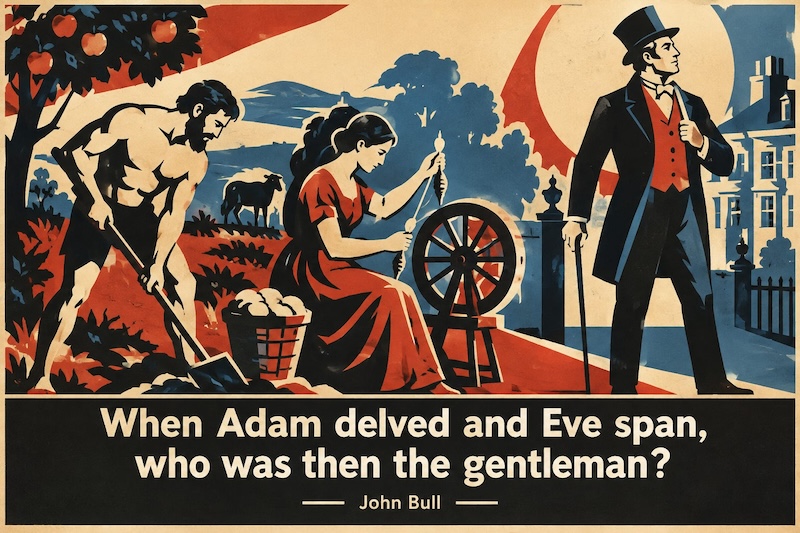
Perhaps the moral status of slavery was not guided by religion or other sources of moral realism after all, and a more subjective view merely decides which rules are most profitable.
Britain was one of the first countries to ban the slave trade in 1807, and other countries followed. But what took them so long?
Slavery in America is probably the moral crime that we are all most familiar with. American revolutionaries fought for their liberty in 1776 while 20% of the population was in chains. These honourable fellows — George Washington, Thomas Jefferson and James Madison — pursued Domestic Tranquillity and the Blessings of Liberty, and at the same time, owned hundreds of slaves between them.
We hold these truths to be self-evident, that all men are created equal, that they are endowed by their Creator with certain unalienable Rights, that among these are Life, Liberty and the pursuit of Happiness.
Declaration of Independence
Jefferson is an interesting case because he was a moral realist (Monticello) who believed that slavery was wrong. He believed Blacks to be morally equal to other Americans, and to have the same rights. He worked hard to eradicate slavery, and yet owned hundreds of slaves himself (SEP). Perhaps, rather than a moral realist, Jefferson was an emotivist who would say “Boo to slavery!” when he was at work, and “Hooray to slavery!” when he got home.
Where a moral realist would say that slavery is wrong by some universal standard, subjectivists would judge it based on their personal feelings or the opinion of society. Attitudes have changed over time, and our attitude to slavery reflects our current feelings and not some eternal truth.
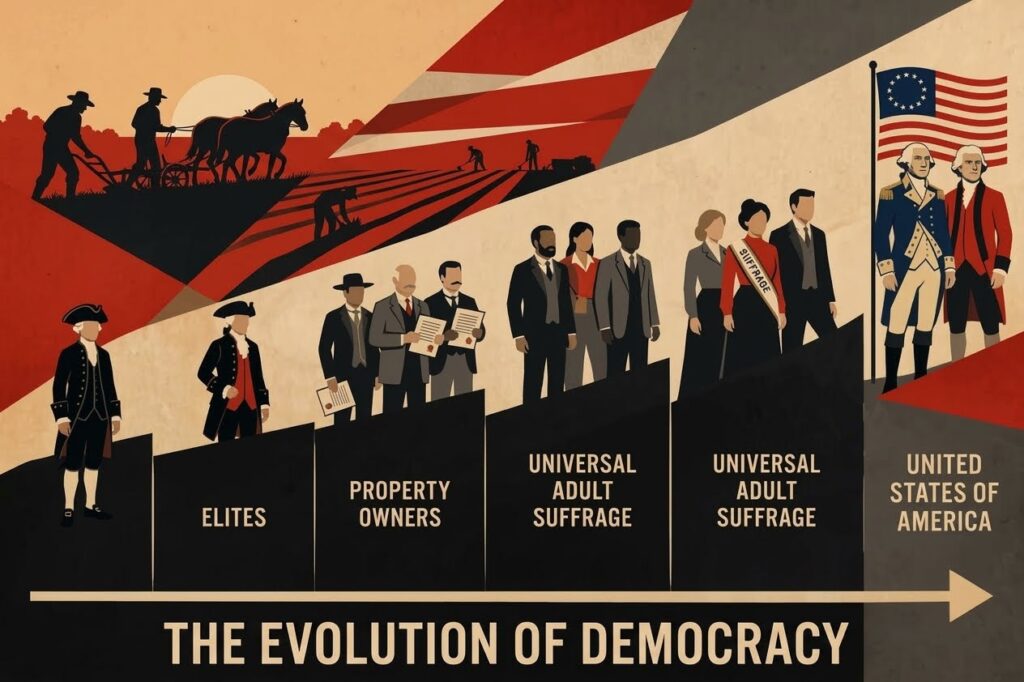
It could be argued that subjectivists’ criticism of slavery is weak because it has nothing to say about the same moral crime in history. But, it seems to me, this is the only moral stance that explains our modern, passionate opposition to slavery while accepting that earlier civilisations found it acceptable. Even the Christians who campaigned so hard to end slavery in the 18th and 19th centuries had different beliefs from the Pope who granted the right to enslave West Africans 400 years before them. It wasn’t until 1917 that the Catholic Church said the “sale of humans into servitude” was a crime (1917 Code of Canon Law). When we claim that religion is the source of our morality, we need to explain why the rules changed so often (Women’s Ordination Campaign).
Subjectivism does leave us with a problem when different cultures have conflicting moral standards, and we are unable to address it. Female Genital Mutilation, for example, is almost universal in Sudan and Somalia, and the most we can do is express our displeasure by saying, “Boo to Female Genital Mutilation!” Subjectivism encourages us to respect the opinions of other cultures, but perhaps subjectivists can collect their displeasure and oppose what they perceive as moral injustice, just as France did when it banned burqas.
While it may be true that we believe the moral rules regarding rape, slavery and murder should be universal for humans, these rules must have come from somewhere. The Catholic Church says that they came from God, while Parfit and Singer said they are just part of the fabric of reality.
Darwinists would say that morality is a mix of rules chosen by evolution to help us to thrive. There is no realism. We might think evolution is just discovering the rulebook written by God, but we must still wonder why it took us so long to find it.

It seems to me that subjectivists have the best claim on the source of morality. It’s easy to dismiss because it allows different societies to choose different sets of rules, but societies choose them regardless of what moral realists have to say. Societies choose their own set of moral rules to match their own cultural habits, and as cultures across the world converge, we can only hope they choose a set of moral rules that we all approve of.