

Cultural Loss
I’m a leftie with a cosmopolitan and (mostly) pro-immigration worldview. I’m certainly not a right-winger but I think we can do a better job of understanding what conservative folk are afraid of when they complain about immigration.
Let’s start with Orwell’s thoughts on patriotism.

Orwell said that patriotism is about a particular place and a particular way of life. Whether justified or not, people are often afraid that immigration will take this away from them but there’s no justification for calling them racist.
Are their fears justified?
I’ve been both an immigrant in a new country and a native in a place with high levels of immigration. As immigrants to California, we tended to cluster together and cling to the culture of the old country. Eventually, we learned to like burritos and baby back ribs and — eventually — the natives began to adopt some of our habits too.
Just during the time I was there, we persuaded their kids to play soccer and their pubs to serve IPA. That was great for me as I like both soccer and IPA but many folks in the native population resented this. The first time I witnessed an American couple getting VERY ANGRY that the pub they had just entered served neither Budweiser nor Miller Lite, I quietly wondered “What have we done to this country?”.

Almaden Valley, California.
On the whole, the USA does a great job of assimilating immigrants and by the second or third generation, the culture of immigrant families is virtually indistinguishable from the culture of native families and they share the same devotion to the same particular way of life.
Immigration should be like guests arriving at a party. If you come to my party, I’d love it if you bring a new dish or a song from the old country for me to enjoy with you. Maybe you’ll share your baba ghanoush recipe and it will become part of our culture along with fish ‘n’ chips, doner kebabs and chicken tikka masala. I might get annoyed if you sit in the corner and eat your sushi on your own but if you share it with me, we can be friends. And the party vibe should change gradually over time as new friends arrive — if it changes too quickly, the early guests will be bummed.
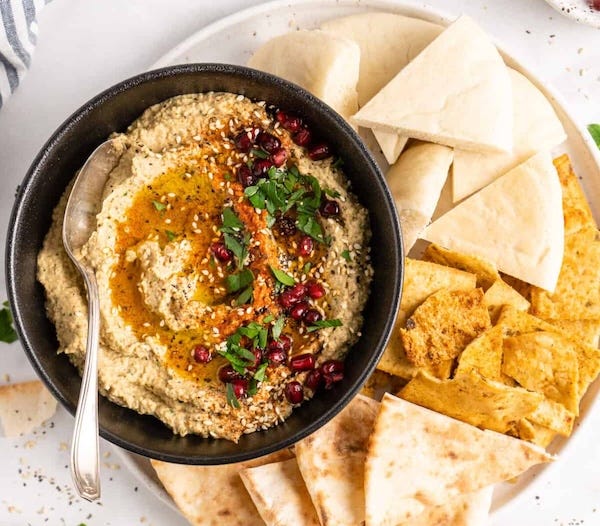
I might resent it too if the new folks insist we only play their music or if they bring so many friends that it doesn’t feel like my party anymore. And if you don’t like bacon sandwiches — that’s fine. But don’t tell me that I can’t eat bacon sandwiches because you don’t like them.
With immigration, there’s a question of scale. If 100 people or 1,000 people come from a country where they don’t drink beer or eat pork, we can all still get along. But if it’s 100,000 or 1,000,000, all the pubs will close and the stalls selling bacon baps will go out of business and the natives will be sad. It doesn’t have to have anything to do with racism; it might just be the culture changing too fast for the natives to adapt.
As Orwell said, the patriotic natives are devoted to a particular place and a particular way of life and they have no wish to force it on other people — but they will surely resent it if you take it away from them. This is what conservatives are afraid of.
When I lived in the East End of London in the 90s, there was a great deal of immigration from Bangladesh. When our pie & mash shops and local boozers closed one by one to be replaced by Bangladeshi restaurants, there was much sadness among the troubled natives. Fortunately, I love Bangladeshi food! I did grieve the loss of the Lord Rodney pub on the Mile End Road though when it was replaced by a shoe shop.

This sense of cultural loss is entirely understandable and ‘our side’ should respond with sympathy rather than instinctively accusing the ‘losers’ of racism. A sympathetic immigration policy should take that into account.
A tiny request. It’s so very hard to get noticed when you start out as a writer.
Please consider sharing this essay so that others will see it. Maybe even add a little comment to say why you disagree with me?
The immigration question is too big for me to get my head around. I follow discussions on news broadcasts. I have taught children whose parents did not have papers. Maybe the children didn’t either. I enjoyed interacting with those families. I am confused when companies cannot find enough employees and wonder why not allow more people in.
This morning I had my first Mandarin lesson. A woman I have chatted with on the bus began asking me questions about how to pronounce words in English. I started asking her for words in Mandarin. So today we met and taught each other for 2 hours. Her son came to America first. When her husband died, she was alone in China and so came to the US to be with her son and other family members.
Turns out we have much in common. She is very happy to be here with her family. She rides the bus daily and takes English lessons to learn more from the Americans she meets. There is a large Asian community in Austin so she might be able to function without English. I am impressed that she wants to learn more. She is 77 years old. I feel richer for knowing her in just a short space of time.
Oh boy, this is so big. Random immediate thoughts include:
—I like your party analogy!
—I think in the U.S. the muddled relationships between church and state and gun culture and other “lifestyles” complicate everything, including immigration.
—I remember saying once about 40 years ago, when my visit to a nature park to benefit from the relaxing and soothing effects of nature was affected by Mexican party music blaring from a boom box belonging to a lively and lovely group of immigrants, “eventually they will figure out that we don’t do that in this kind of park.” But I felt a twinge of that fear you are describing here…a little voice in my head asking, “but what if they don’t, and this becomes accepted practice?”
In other words—“What if people like me become a minority? Where will I find the peace in nature that I have always cherished and must have in order to be happy and healthy?” As we’ve learned repeatedly, and during COVID particularly recently, people don’t want to be forced to change their ways and some will push back in hateful and harmful ways in order to defend their “way of life.” Their traditions and routines. Their personal preferences.
—I think you are correct that acknowledging this is a better strategy than simply calling people xenophobic or racist or unpatriotic because they see immigrants as a threat to their way of life.
Yes, that’s a good way of putting it. People don’t want to change their ways.
Just a funny aside…my hijab-wearing Bengali friend mentioned that there was a pub that she wanted to see inside as she’d always been intrigued. I went through the names of a few of the ‘prettier’ establishments, as there has been a lot of refurbishment. We eventually narrowed it down to The George! Not what I was expecting 🙂
Excellent! I wonder if they still have music on a Friday night.
Do you still live in the Limehouse area, Helen?