
Procrastinating authentically
I have a particular style of procrastination that kicks in when I need to get something done. It’s especially paralysing when the task is both intellectually challenging and fun.
Let’s say I have an essay to write. The deadline is a week away. The prompt is Why did the existentialists believe that it’s important to live authentically?
Writing essays on philosophy might not be your cup of tea but I really enjoy it. Writing about a topic forces me to focus on what I really understand and really believe; there’s no faking it like I might in a hand-wavy conversation. How to live authentically? is a question that is always on my mind and, in the week before my essay is due, it occupies every waking moment
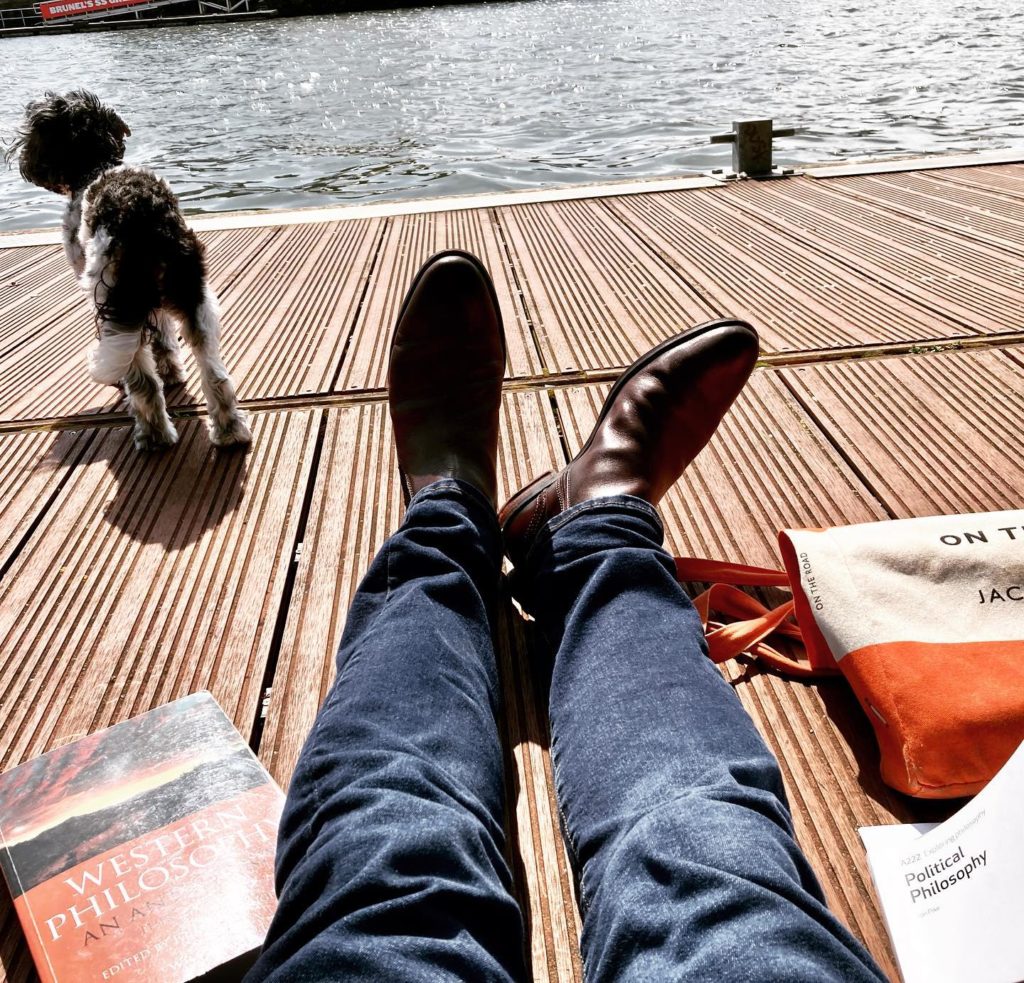
I usually end up writing the whole essay in my head while staring into my beer at the Grain Barge or watching the ducks in the harbour with Pearl. All that remains is to write it down. But there is something else I need to get done first…
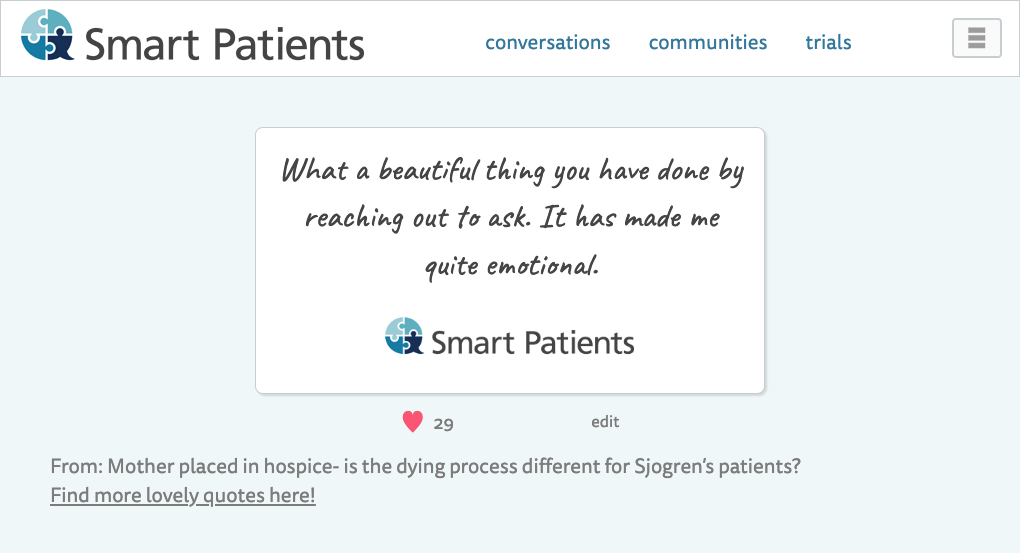
Before I can write my essay, I have something important I need to finish for work. I have to generate quotes from the Smart Patients community that can be shared on social media as a way to attract new members.
The code for generating quotes is easy but tedious. I’d much rather be working on my essay but as a conscientious worker, I can’t give myself permission to work on the fun stuff while there is important stuff to get done.
But the quote stuff is boring and my mind drifts back to my essay. I end up working on neither and waste my time doom-scrolling on Twitter instead. Maybe tomorrow will be better. That deadline is getting closer. I really need that deadline.
As with essays, so with life. John Lennon said that ‘Life is what happens while you are busy making other plans’. I bet we all have challenging and fun ideas that we’ll get to just as soon as we fulfil our other obligations. Sartre had something to say about this.
Jean-Paul Sartre (1905-1980) defined existentialism as a philosophy of freedom. The name itself comes from Sartre’s observation that, for everyday objects, the essence of an object—its nature or purpose—is conceived by its designer. For example, consider a knife. The essence of a knife is that it is sharp and used to cut things. The knifemaker has the nature and purpose in mind before the act of creation and thus the essence of the knife precedes the knife’s existence.
Earlier philosophers, such as Descartes and Leibniz, believed that humans were given meaning and purpose by God but for Sartre, since there is no God, we are forced to find our own meaning after we come into existence. Thus, for existentialists, ‘existence precedes essence’ and existentialism guides our quest to find meaning in our lives. Having been thrown into the world, we alone are responsible for the choices we make, starting with our search for meaning.
The responsibility to choose often collides with obligations imposed by society’s conventions or family expectations but Sartre said we must choose nonetheless. To allow others to tell us how to live and how to behave is to act in bad faith. To live authentically, we must face up to the choices in front of us even when society might disapprove.
To illustrate, consider a young man who grows up in a mining village where everyone is expected to become a miner when they finish school. Our young man dreams of becoming a writer but his father and grandfather before him were miners and his parents expect him to contribute to the household with a miner’s wage. To live authentically, he must decide whether to follow his dream or his family’s wishes. To deny that he has a choice would be living in bad faith. Sartre took a hard-line view of our responsibility to choose but this view was contested by other philosophers such as Beauvoir.
Simone de Beauvoir (1908-1986) agreed with Sartre that the burden of freedom is heavy and it’s tempting to ‘flee freedom’ by denying the possibility of choice. For Beauvoir, women and girls are especially prone to accept the constraints of convention and to avoid the heavy burden of freedom by denying it and many women feel unable to make the difficult choices that would enable them to live authentically. Even so, men and women alike face the ‘anguish and stress of authentically assumed existence’ and must choose how to live. To live authentically is to accept responsibility for one’s choices and for finding one’s own purpose in life but the stress of choosing often leads to anguish. For many of us, it is easier to deny this responsibility entirely than to face the anguish of choosing.
While I agree with Beauvoir that we are often constrained by family or career obligations, I’d note that there are usually more choices available to those who dare to look for them. It can be difficult to recognise all the choices and, even when we do, it is stressful to choose between them. In my own life, I have made many unconventional choices: I left home and school at 16; I’ve lived and worked in several countries and changed careers twice when it would have been safer and more comfortable to stick with the status quo. But, as I get older and accumulate responsibilities, it becomes harder to ‘up sticks’ to follow a dream and the mere act of contemplating another, more exciting option leads to a feeling of ennui or, to use Beauvoir’s term, anguish as I consider the things I might lose should I leave this life behind. But contemplate it I must, all the same.

It turns out that you can leave after all.
Sartre said that to live an authentic life, we are condemned to choose. I agree enthusiastically. While there are certainly extreme situations where no choice is available, in most situations the choices are there if we look for them and to live the best life available we should force ourselves to ask which option we would take if we were free to choose. That option is often available if only we are willing to pursue it hard enough. The obstacles in our way, formidable though they may appear, are surmountable if we are determined.
But, as with essays, so with life. The sands of time are running out and if I am going to make choices, I need to make them while there is still sand in the top of the glass. Just as the obligation to work on my day job prevents me from starting the essay I want to write, the obligations of everyday life prevent me from pursuing my next adventure and I end up doom-scrolling instead. Unlike with my essay, my deadline seems to have been postponed for now.
Making choices was never this hard before. Maybe tomorrow will be better.

Going to see the river man
— Nick Drake
Going to tell him all I can
About the ban
On feeling free
A good read, Kevin. They are interesting, I think, the existentialists. I have the book about Frantz Fanon by Peter Hudis. Procrastination is a problem that I recognise. What helped me a lot is making a plan. But dreaming is also useful now and then, I think.
I am new to existentialism so thank you for the clear explanation about the order of essence and existence! A wonderful read as ever. Thank you for sharing.
Kevin, I have always appreciated and enjoyed your writing style and views. This one though, struck a personal chord within me today. My recent life changes have put other choices in front of me and I too, have been “procrastination doom scrolling” in avoidance of choosing/deciding about some of those things. Not least of which, is about how best to “help” a good friend recognize the multitude of choices before them, when all they can see is no other choice but the one of least resistance. Your words gave me the mental nudge I needed to procrastinate less on my own options, but to also provide a nudge to my friend in a way that might empower them to envision future possibilities other than the path they currently feel resigned to taking.
So, thank you Kev, for sharing your mind with us. ? Love ya!
Great read, Kevin 🙂
FYI – That was a smiley emoji above! Not a question mark. Really enjoyed the post 🙂
Thank you for your kind words! I had been meaning to write a post about the relationship between procrastination and life choices for a while. The stuff about existentialism kind of elbowed its way into the middle of it. Not sure it worked. Oh, well!
I created the database before emojis were a thing. I guess I should fix the emoji problem one of these days.
How many times in my life have I wished someone would simply tell me what to do? Too many to count. “Analysis paralysis” seems to be my default mode. Though I have some big decisions I need to make these days, I generally postpone repeatedly, choosing to make *easier* decisions instead, many of which involve disappearing down some internet rabbit hole for a few hours, looking up an old song, a book a friend told me about, a recipe for something I ate at a party last month. Thanks for writing this. (Can’t it count as your essay? ;-)) Obviously I could benefit from learning more about philosophy, but I can’t decide which philosopher to start with! LOL
For essays, the Fear of the Deadline works on me. As the deadline gets closer, the motivation to write increases. The trouble is, for the bigger life choices, there is no deadline. I thought I had a deadline and everything was suddenly urgent. Then when the deadline got cancelled, I went back to drifting along. The things that were urgent are still urgent — writing, travelling, reading — but without the deadline, there is always an easier choice to take and I make no progress.
That’s it! Always a “task-oriented” little creature, I’ve done my best work in school, at home, and in three very different careers when I had a checklist and a deadline. Retirement has revealed how very dependent I have been on the structure of assigned tasks and expectations for timely completion. And how little I respect my assignments and deadlines I create for myself! Good luck with the essay, thanks for the book rec, will look it up today!
Nigel Warburton’s Little History of Philosophy is good place to start. He covers a lot of ground in a short little book and it will help you decide what to read next. I’m really interested in How Should We Live? and How does the Mind Work?
I just re-read this. It’s pretty good, even if I say so myself!!
I have a bunch of existentialist books by my bed that I have been putting off. Mostly Beauvoir & Sartre. I should get back to them.
I have a secret voting scheme that determines what order posts are shown on the home page (favourite ones at the top). I just upvoted this! 🙂
Thank you everyone for your kind words.