

How should we live?
Someone suggested The Salt Path for our book club on Smart Patients. I was attracted to it because Ray’s (the author) and Moth’s (her husband) circumstances are similar to mine. Like Moth, I have an incurable disease that will cause my brain to deteriorate and will eventually result in my death and, like Moth, I have no expiry date.
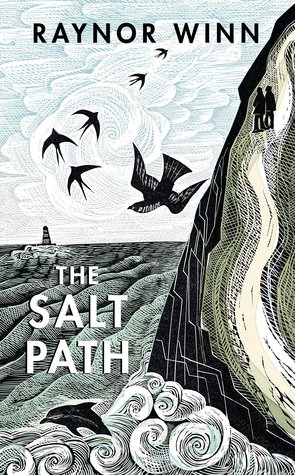
Ray and Moth got screwed in a business deal and they lost everything from their home to their source of income to their favourite sheep. They were left homeless and the only thing they can think of to do is to walk the 630-mile South West Coast Path around the coasts of Somerset, Devon, Cornwall and Dorset. They survived on thirty pounds per week by camping in the wild and eating noodles and seaweed.
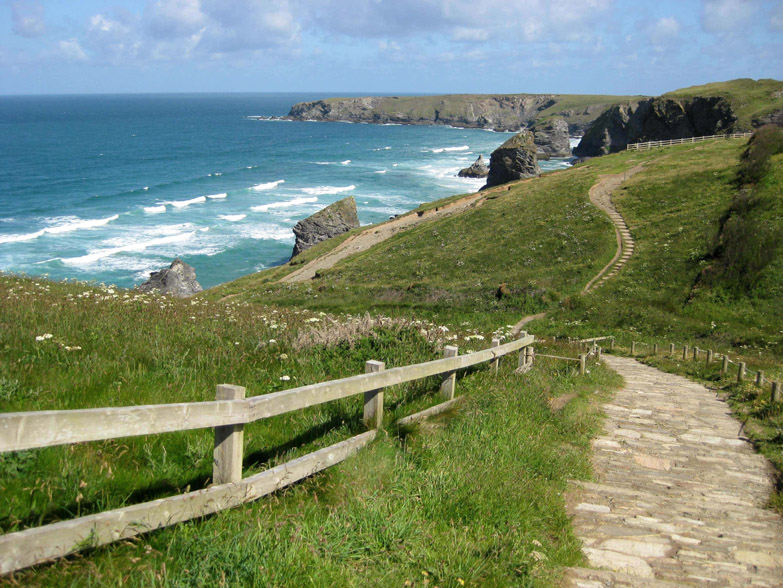
Like Ray & Moth, I will soon have to move out of the house that I love. My straits aren’t quite as dire as Ray & Moth’s — I have savings — but my future too is entirely uncertain. I happen to live near the start of the South West Coastal Path and the idea of catching the bus down to Minehead and leaving everything behind is really appealing about now.
I was moved by the constant, nagging question that Ray asks: “What next?”. I ask myself the same question every day. Their constant answer: “We just keep going” was inspirational — though I wish I were doing something a bit more heroic with my final days like wild camping or trekking through the jungles of Burma instead of writing code and paying the mortgage.
Several companies ago, when it became clear that our startup was not going to make it and we had to do something different to survive, we had a meeting of the leadership team and I argued that it would be better to go into battle swinging from the yardarms with our cutlasses between our teeth than to just keep sailing along, hoping that our fortunes might change with the wind. Better to go down in glory, adventurers to the very end, than to wait for the end to come to us. Someone else countered that he had a mortgage to pay and that now was not the time to try anything risky. We chose to wait patiently for the end but I quit before the end arrived.
The book that we ended up choosing for our book club — Aristotle’s Way: How Ancient Wisdom Can Change Your Life — asks the question “How should we live?”.
I wish I had the book with the answer.
I love to stay at Old Dungeon Ghyll Hotel in the Great Langdales, Lake District, Cumbria. I arrive by train and then bus. Endless, spectacular walking routes for a day starting from the hotel front door. Return to the Hotel in each evening. Other options for lodging are New Dungeon Ghyll Hotel and a lovely campground across the road. Logistics are simplified because no need to change lodging. Campground has a small grocery store. Low-level and high-level trails abundant. Breath-taking views. Lots of history. Ambleside is 30-minutes away by bus. See Wainwright walking guides for trails in the fells. I love the Old Dungeon Ghyll because it is not surrounded by any other buildings or a village, a solitary retreat out there in Great Langdale Valley.
I went camping (and windsurfing and canoeing) in the Lake District in my youth but haven’t been back since. I should fix that.
Reading this, I am made aware that “how *shouldn’t* we live?” has influenced me and my decisions far more than “how *should* we live?” has. Maybe two sides of the same coin, but am going to take some time to ponder if that says anything significant about how my life has played out, or if it explains at all why I cannot relate to some people even a tiny bit no matter how hard I try. Maybe *all* descendants of Puritans live under the shadow of “thou shalt not”s. Much to contemplate! Interesting post, thanks.
I’ve taken a couple of those personality tests at a couple of employers (one was Myers-Briggs & another was DISC) that purported to tell you who you will and who you will not get on with. I’m sceptical of personality tests in general but they both pinpointed exactly the people who I would not get on with (I get on with most people) and gave me tips for how to get on with them (NARRATOR: they did not help).
There’s another, more credible, personality test called The Big Five (or, sometimes, OCEAN). The O in OCEAN is Openness to Experience and it explains a lot about who stays in their hometown and who moves on to see the world (and who goes searching for American Food when in Rome or who complains about the toilets at the top of the volcano in Bali).
That’s cool, will look up OCEAN. Meyers-Briggs I took 32 yrs ago after I’d been off work for 5 years and didn’t want to do what I had done before. It helped me accept that a job opp I had but was resisting might actually be a good fit, and that there were good reasons I couldn’t get excited about another opp. Mostly though it helped me understand situations at home with more insight—husband did not even take it the test, but once I saw the breakdown of types and combos of letters, I knew immediately who he is and understood just as immediately that we’d made a serious mistake hooking up. Not really. I’m kidding, but we wouldn’t win any prizes for natural and effortless compatibility throughout a lifelong partnership. But it allowed me to get on with things instead of spending valuable time and energy trying to figure out how to change them/him/me. I love those kinds of tests, always have. Not the FB ones though lol. Do I need to read the Aristotle book? Sounds like it might be a good one.
Aristotle book is a quick and easy read. I gave it a rare five stars.
Oh no ! another. Addition to my reading list. Aristotle’s Way.
Loved the review. I bought The Salt Path ages ago but something else always ends up ahead of it. I see I really need to bump it up the list though.
They just started filming a movie of The Salt Path. Mrs Clown is hoping to get chosen as an extra.
We just watched the movie of The Salt Path. Marvellous! I recommend it.