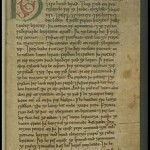
Hic Harold Rex Interfectus est
October
2011
Every English schoolboy knows that history began in 1066. Continue reading

Every English schoolboy knows that history began in 1066. Continue reading
The History of English continues with the Norman invasion. Tasty fact: cow, sheep & swine came from English but beef, mutton & pork from the French.
I love learning about the history of English. I love the Open University and I especially love the fact that they put all of their courses online. It’s almost enough to make me want to finish my OU degree. In … Continue reading

What strikes me is how bleak those times were and how close Britain was to utter disaster. Continue reading
The Times has a great series of essays by Errol Morris on Thomas Kuhn’s The Structure of Scientific Revolutions. According to the author, Structure is a post-modern work which makes the relativist claim that people in one paradigm (or culture … Continue reading

A long time ago, there was a King of England called King James I. Continue reading
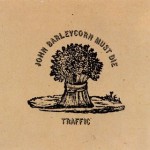
One thousand years later, beer is still excellent and the song is still fantastic. Continue reading
In the comments at In the confident hope of a miracle, Matt suggested that the founding fathers were – or at least appeared to be – devout Christians and added It would have been heresy 🙂 to elect someone who … Continue reading
The defeat of the Spanish Armada, in 1588, marked the end of Spain as a global power. Before sailing, one Spanish commander “reasoned” as follows: “It is well known that we fight in God’s cause. So when we meet the … Continue reading
Scott Adams proposes a plan to rid the world of religious extremism I have often thought that America’s strict rule about not teaching religion in schools is responsible for the fact that the more fervant forms of christianity are more … Continue reading