He has within him the possibility to change the direction and tone of American foreign policy, which need changing; his rise will serve as a practical rebuke to the past five years, which need rebuking; his victory would provide a fresh start in a nation in which a fresh start would come as a national relief. He climbed steep stairs, born off the continent with no father to guide, a dreamy, abandoning mother, mixed race, no connections. He rose with guts and gifts. He is steady, calm, and, in terms of the execution of his political ascent, still the primary and almost only area in which his executive abilities can be discerned, he shows good judgment in terms of whom to hire and consult, what steps to take and moves to make. We witnessed from him this year something unique in American politics: He took down a political machine without raising his voice.
A great moment: When the press was hitting hard on the pregnancy of Sarah Palin’s 17-year-old daughter, he did not respond with a politically shrewd “I have no comment,” or “We shouldn’t judge.” Instead he said, “My mother had me when she was 18,” which shamed the press and others into silence. He showed grace when he didn’t have to.
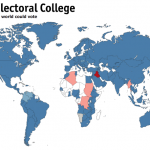
Back in 2000 America stood tall as the undisputed superpower, at peace with a generally admiring world. The main argument was over what to do with the federal government’s huge budget surplus. Nobody foresaw the seismic events of the next eight years. When Americans go to the polls next week the mood will be very different. The United States is unhappy, divided and foundering both at home and abroad. Its self-belief and values are under attack. For all the shortcomings of the campaign, both John McCain and Barack Obama offer hope of national redemption. Now America has to choose between them. The Economist does not have a vote, but if it did, it would cast it for Mr Obama. We do so wholeheartedly: the Democratic candidate has clearly shown that he offers the better chance of restoring America’s self-confidence.
No, seriously. Remember Republicans? Sober men in suits, pipes, who’d nod thoughtfully over their latest tract on market-driven fiscal conservatism while grinding out the numbers on rocket science. Remember those serious-looking 1950’s-1960’s science guys in the movies — Republican to a one.
They were the grown-ups. They were the realists. Sure they were a bummer, maaaaan, but on the way to La Revolution you need somebody to remember where you parked the car. I was never one (nor a Democrat, really, more an agnostic libertarian big on the social contract, but we don’t have a party …), but I genuinely liked them.
How did they become the party of fairy dust and make believe? How did they become the anti-science guys? The anti-fact guys? The anti-logic guys?
If Obama wins (and I still don’t have the audacity to hope) next week, maybe the best thing that will come of it is that we get our old republicans back. I miss ‘em.
Obama made his name by giving great, set piece speeches like the magnificent Walls of Jericho speech at the Ebineezer Church but, since the primary election has been over, he seems to have very consciously toned it down a little. His recent speeches have been more traditional campaign speeches as though he was wounded by the superstar digs. Even his DNC speech was pretty conventional by Obama standards.
I have been hoping for one last big speech on a topic less mundane than Winning Elections. I think it’d be well received and do him a lot of good - especially among the people that are only now starting to pay attention to what he has to say.
But I have to say - even his speeches on Winning Elections are pretty good.
Why should someone earns more pay more taxes than someone earns less?
Old McCain: “I think it’s to some degree because we feel, obviously, that wealthy people can afford more.”
Doctor’s daughter: Aren’t we getting closer and closer to, like, socialism and stuff?
Old McCain: “Here’s what I really believe. When you are, reach a certain level of comfort, there is nothing wrong with paying somewhat more.”
That was a long time ago though.
New McCain: He said “We need to spread the wealth around”. That’s one of the tenets of socialism.
Palin: Now is not the time to experiment with Socialism.
Mr. Greenspan said he had made a “mistake” in believing that banks in operating in their self-interest would be sufficient to protect their shareholders and the equity in their institutions.
Mr. Greenspan said that he had found “a flaw in the model that I perceived is the critical functioning structure that defines how the world works.”
Mr. Greenspan, who headed the nation’s central bank for 18.5 years, said that he and others who believed lending institutions would do a good job of protecting their shareholders are in a “state of shocked disbelief.”
When asked what we could do to fix the mess that he had caused, Greenspan mysteriously responded